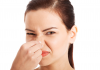
See your doctor if
you suddenly begin to sweat more than usual or experience night sweats
for no apparent reason. A cold sweat is usually your body's response to
a serious illness, anxiety or severe pain. Seek immediate medical
attention for a cold sweat if you have signs of lightheadedness or chest
and stomach pains.
Also talk to your
doctor if you notice a change in body odor — it may be a sign of certain
medical conditions. A fruity smell, for example, may be a sign of
diabetes and an ammonia smell could indicate liver or kidney disease. In
addition, a rare condition known as fish-odor syndrome (trimethylaminuria),
causes an odor similar to rotting fish. People with fish-odor syndrome
have a defective gene that prevents them from metabolizing
trimethylamine (TMA), a natural byproduct of the digestion of foods such
as saltwater fish, eggs and liver.
Complications
Complications associated with too much or too little sweating can range
from annoying to life-threatening. Common complications of excessive
sweating include:
-
Fungal nail
infections.
People who sweat profusely are prone to many types of fungal
infections. That's because fungi thrive in warm, moist environments
such as sweaty shoes. That's also why you're more likely to get an
infection in your toenail than in your fingernail. A nail infection
usually begins as a white or yellow spot under the tip of your nail.
As the fungal infection spreads deeper, your nail may discolor,
thicken and develop crumbling edges. Sometimes your nail may
separate from the nail bed, and the skin around it may become red
and swollen. You may even detect a slight odor.
-
Athlete's
foot.
Sometimes sweaty feet just smell bad. That unmistakable foot smell,
which occurs when sweat and bacteria mix, may or may not occur along
with athlete's foot — a fungal infection that usually begins between
your toes and causes your skin to itch, burn and crack. Athlete's
foot can also affect the soles and sides of your feet, causing your
skin to peel or thicken.
-
Jock
itch.
This fungal infection causes an itching or burning sensation around
your groin. You may also have a red rash on your inner thighs and
buttocks. Jock itch is mildly contagious and can spread by contact
or shared towels.
-
Bacterial
infections and warts.
Excessive sweating can contribute to bacterial infections,
especially between your toes. It can also lead to warts — skin
growths caused by the human papillomavirus (HPV).
-
Heat rash
or prickly heat.
This rash occurs when the pores around the sweat glands become
blocked. As a result sweat becomes trapped under your skin, causing
fine red spots or bumps — usually on the upper back, chest or arms.
It most often occurs in hot, humid weather and generally affects
babies and young children. Heat rash can also occur if your baby is
dressed too warmly or has a fever.
-
When you stop
sweating or don't perspire enough to cool your body, the results can
be serious or even fatal. Complications of a lack of perspiration
include:
-
Heat
exhaustion.
This can occur suddenly, often because of excessive exercise and
inadequate fluid intake. The signs and symptoms include faintness,
nausea, a rapid heartbeat, ashen appearance and hot, dry skin. If
you have heat exhaustion, you need to cool down immediately by
getting into the shade and drinking cool — not cold — fluids. Heat
exhaustion can quickly progress to heatstroke.
-
Heatstroke.
Heatstroke can occur when you work or exercise strenuously in hot
weather and don't drink enough to replace the fluids you've lost.
Older adults, people who are obese and children with HED are at high
risk of heatstroke. Heatstroke is particularly serious because your
body's normal mechanisms for dealing with heat stress, such as
sweating, are lost. In some cases, heatstroke can be fatal. The main
signs and symptoms of heatstroke are a high temperature, hot dry
skin and confusion or even coma.
Treatment
For some
people who sweat excessively, the answer may be simple: an
over-the-counter (OTC) antiperspirant used on the hands and feet as well
as the underarms. Antiperspirants block your sweat ducts with aluminum
salts, thereby reducing the amount of perspiration that reaches your
skin. Deodorants, which can eliminate odor but not perspiration, turn
your skin acidic, which makes it less attractive to bacteria. Although
you may have heard stories linking antiperspirants and breast cancer,
there's no evidence of such a link.
Antiperspirants can cause irritation or even contact dermatitis — red,
swollen, itchy skin. In fact, antiperspirants are the cosmetic product
most associated with skin irritation. Deodorants, especially herbal or
crystal deodorants, may be less irritating for most people.
If OTC
products aren't strong enough, your doctor may suggest a prescription
antiperspirant. For more severe problems with sweating, he or she may
recommend other treatments, including:
-
Iontophoresis.
In this procedure, a dermatologist uses a battery-powered device to
deliver a low current of electricity to the affected area. Although
iontophoresis is painless and quite safe, it may be no more
effective than a topical antiperspirant.
-
Botulinum
toxin (Botox).
This is the same product that helps smooth facial wrinkles by
paralyzing certain muscles. Researchers have discovered that Botox
injections are also an effective way to treat severe hyperhidrosis
by blocking the nerves that trigger the sweat glands. Botox isn't a
cure-all, however. It may take several injections to achieve the
desired results, the treatment can be painful, and the results only
last about 4 months. In addition, although Botox stops sweating, it
doesn't prevent body odor.
-
Surgery.
In rare cases surgery may be an option. If excess sweating occurs
just in your armpits, removing the sweat glands may help. Another
procedure involves cutting the nerves that carry the messages from
the sympathetic nerves to the sweat glands. At one time this was a
major operation, requiring large incisions in the chest or back to
reach the spinal column, where the nerves are located. You typically
stayed in the hospital a week and could expect to spend a month
recovering. But today the surgery can be performed laparoscopically
using a procedure known as endoscopic thoracic sympathectomy. It
requires just three small incisions for a video telescope and small
surgical instruments. Although the operation is delicate, it
typically requires only a day in the hospital and produces minimal
scarring. Following the surgery, sweating on the hands permanently
stops. But increased sweating can occur elsewhere on your body, such
as your back or the back of your legs.